




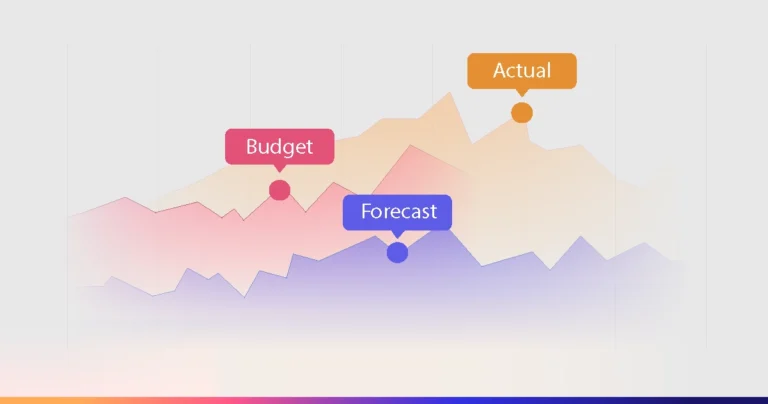
A budget sets the financial expectations for a period. Actual results show what happened. The difference between the two is where management gets useful performance information.
So, what is budget variance? It is the difference between budgeted and actual financial results. But the number itself is only the starting point. What is budget variance analysis really about? It is the process of investigating why the gap occurred and whether it signals a change that requires management attention.
For finance teams, understanding what is variance in budgeting means looking beyond whether a number is higher or lower than planned. The objective is to identify the underlying driver and determine what, if anything, should change.
Where Did Actual Results Begin To Move Away From The Budget?
The first step in understanding what is budget variance is identifying where actual results diverged from the original plan.
A variance can appear across revenue, payroll, operating expenses, cost of goods sold, capital spending, or other financial lines. The comparison should use the same reporting period and consistent accounting data so that timing or data-quality differences do not create misleading conclusions.
Start with the size and direction of the gap
For each material line item, compare:
- Budgeted amount
- Actual amount
- Dollar variance
- Variance percentage
- Cumulative variance over time
For example, if a department budgeted $200,000 in operating expenses but spent $225,000, the $25,000 difference is an unfavorable expense variance. If revenue was budgeted at $500,000 and actual revenue reached $535,000, the $35,000 difference is favorable.
However, the headline number does not explain the cause. That is where budget variance analysis becomes more useful than a simple budget-to-actual report.
When Does A Variance Count As Favorable Or Unfavorable?
Favorable does not always mean good
A favorable variance generally improves results compared with the budget. For revenue, this could mean actual revenue exceeded plan. For expenses, it could mean actual spending was below budget.
An unfavorable variance generally reduces performance compared with the budget. Revenue below plan or expenses above plan would typically fall into this category.
But the label does not explain whether the underlying business decision was sound.
For example, lower labor costs could produce a favorable variance because fewer employees were scheduled. If that led to missed deadlines or reduced output, the favorable number may conceal an operational issue. Likewise, higher marketing costs may be unfavorable against budget but could support stronger-than-expected revenue.
This is why what is budget variance analysis cannot be answered by simply labeling numbers as favorable or unfavorable. The business context matters.
What Do Price, Volume, Timing, And Efficiency Reveal About The Gap?
Price variance
Price variance shows the impact of paying or receiving a different price than the amount assumed in the budget.
For example, higher supplier prices could explain why material costs exceeded plan even when the quantity purchased was close to expectations.
Volume variance
Volume variance captures differences in activity levels. Higher sales volume, fewer units produced, or changes in customer demand can all move actual results away from the original budget.
A business may therefore exceed its expense budget simply because it handled significantly more activity than originally forecast.
Timing variance
Some differences are timing-related rather than permanent. A software implementation, hiring cost, customer payment, or major purchase may occur earlier or later than expected.
A timing variance should not automatically trigger a change to the underlying forecast if the cost or revenue is simply shifting between periods.
Efficiency variance
Efficiency looks at how effectively resources were used. Labor hours, production inputs, service capacity, or other operational measures can reveal whether the business used more or fewer resources than expected.
Looking at price, volume, timing, and efficiency together provides a more useful explanation of what is variance in budgeting than reviewing the dollar difference alone.
Which Variances Require Corrective Action?
Not every variance deserves the same level of investigation. Effective budget variance analysis focuses management attention on differences that are material, recurring, unexpected, or strategically important.
Consider materiality and recurrence
A $2,000 variance may be insignificant on a $10 million cost base but material for a smaller expense category. Percentage variance should therefore be considered alongside the absolute dollar amount.
Recurring variances can also point to a weakness in the underlying budget assumptions. If payroll has consistently exceeded budget because hiring dates were unrealistic, the issue may be the planning model rather than payroll execution.
Separate controllable and external drivers
Some variances can be influenced by management decisions. Others may result from supplier pricing, market conditions, customer demand, regulatory changes, or other external factors.
The response should match the cause. A persistent cost overrun caused by inefficient processes may call for operational changes. A variance caused by a sustained change in market pricing may require a revised forecast or updated budget assumptions.
The goal of budget variance analysis is therefore not to eliminate every variance. It is to identify which differences matter, understand why they occurred, and determine whether the plan or the underlying operation needs to change.
Conclusion
Understanding what is budget variance is straightforward: it is the gap between planned and actual results. The real value comes from determining what caused that gap and what it means for future performance.
By breaking variances down by price, volume, timing, efficiency, materiality, and recurrence, finance teams can move from reporting differences to explaining performance. That gives management a stronger basis for deciding whether to correct operations, revise forecasts, or update future budgets.
For businesses that need consistent financial reporting and analysis, reliable accounting support can also help ensure that actual results are accurately captured and ready for meaningful budget-to-actual review.