

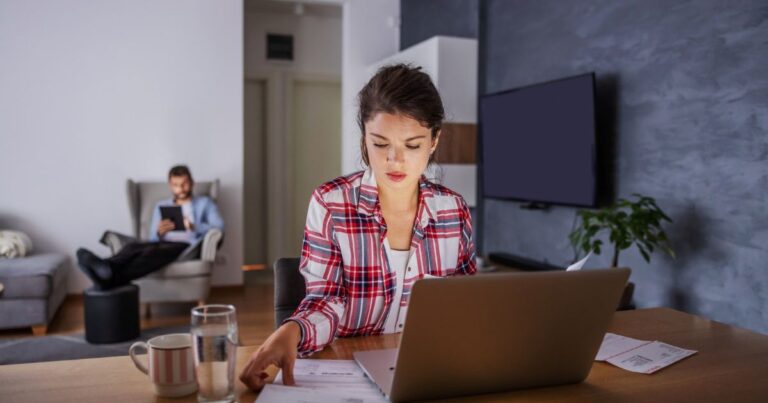
Millions of Australians work from home at least part of the time. Whether it is a full-time remote arrangement, a hybrid schedule, or occasional work done outside the office, the costs of working from home can add up – and many of those costs are legitimately deductible.
The ATO’s rules around work-from-home deductions have evolved significantly over recent years. For the 2025-26 financial year, two main methods apply: the revised fixed rate method and the actual cost method. Understanding which method delivers the better outcome – and what records are required to support the claim – can make a meaningful difference to your tax return.
Who Can Claim Work From Home Deductions?
To claim work-from-home deductions, the following conditions must be met:
- The work must be performed from home, not just administrative tasks that could be done anywhere
- The costs must be directly related to earning assessable income
- The individual must not be reimbursed by their employer for the expense
- Records must be kept to substantiate the claim
Both employees and self-employed individuals can claim work-from-home deductions, though the rules differ slightly. Employees claim deductions on their personal tax return. Self-employed individuals and sole traders may also be able to claim occupancy expenses such as rent or mortgage interest if a portion of the home is used exclusively and regularly for business, though this comes with capital gains tax implications and should be carefully considered.
Method 1: The Revised Fixed Rate Method (67 cents per hour)
The revised fixed rate method, introduced from 1 July 2022, allows eligible workers to claim 67 cents for every hour worked from home during the financial year. This rate covers a broad range of home office running costs, making it the simpler of the two methods for most people.
What the 67 Cents per Hour Rate Covers
The 67 cents per hour rate is designed to cover the following expenses in a single, consolidated claim:
- Electricity and gas (energy costs for heating, cooling, and lighting the workspace)
- Internet costs (the work-related portion)
- Mobile and home phone usage (the work-related portion)
- Stationery and computer consumables (paper, printer ink, pens)
Because the fixed rate already covers these costs, they cannot be claimed separately on top of the 67 cents per hour rate. Attempting to claim both the fixed rate and individual utility or phone costs for the same period is a common error the ATO actively looks for.
What is NOT Covered by the Fixed Rate
The fixed rate does not cover the decline in value (depreciation) of assets used while working from home, such as computers, monitors, desks, chairs, and other equipment. These can be claimed separately, in addition to the 67 cents per hour rate, provided the asset is used for work purposes.
Items that can be claimed separately on top of the fixed rate include:
- Depreciation of office equipment, computers, and monitors
- Repairs and maintenance of work-related equipment
- The work-related portion of the cost of a dedicated office chair or desk purchased during the year
Record-Keeping for the Fixed Rate Method
From 1 March 2023 onwards, the ATO requires that all hours worked from home be recorded in a log or diary for the full financial year – not just a representative four-week sample. This is a stricter requirement than previously applied and catches many claimants who simply estimate hours without a contemporaneous record.
Acceptable records include:
- A diary, spreadsheet, or calendar entry logging hours worked from home each day
- Timesheets or rosters confirming home-based work hours
- Records of at least one bill or account for each of the expenses covered by the fixed rate (internet, phone, electricity)
Method 2: The Actual Cost Method
The actual cost method allows a deduction for the genuine work-related proportion of every home office expense actually incurred. This method requires significantly more record-keeping but may result in a larger deduction – particularly for individuals with high home office usage or expensive equipment.
For self-employed individuals and business owners, outsource bookkeeping can help keep expense records, receipts and financial information organised throughout the year, making it easier to support work-from-home deduction claims.
What Can Be Claimed Under the Actual Cost Method
Expense Category | Claimable Portion | Notes |
Electricity and gas | Work-related % of total energy bill | Based on floor area of workspace vs total home area, adjusted for hours of use |
Home internet | Work-related % of total bill | Calculated based on work use vs personal use of the connection |
Mobile/home phone | Work-related % of calls and data | A representative 4-week log is acceptable for phone use calculation |
Office equipment depreciation | Work-related % of asset value per year | Calculated using ATO effective life schedules |
Office furniture depreciation | Work-related % of asset value per year | Desk, chair, shelving, filing cabinets |
Cleaning costs | Work-related % of cleaning costs | Only if a dedicated work area is cleaned separately |
Occupancy costs (rent/mortgage interest) | Work-related % based on floor area | Only if area is used exclusively and regularly for work – CGT implications apply |
Record-Keeping for the Actual Cost Method
The actual cost method requires comprehensive documentation, including:
- All receipts and invoices for expenses claimed
- A record of hours worked from home for the full year
- Evidence of the floor area of the workspace relative to the total home area
- Purchase receipts and depreciation calculations for all claimed assets
- A representative usage log for phone and internet if claiming a percentage of total costs
Comparing the Two Methods: Which Is Better?
Factor | Fixed Rate (67c/hr) | Actual Cost Method |
Simplicity | High – one rate covers most running costs | Low – every expense tracked and calculated separately |
Record-keeping required | Hours log + one bill per expense type | Full receipts, floor area evidence, usage logs |
Best suited to | Employees, part-time home workers | Full-time home workers, self-employed, high earners |
Equipment depreciation | Claimable separately | Claimable separately |
Occupancy expenses (rent/mortgage) | Not claimable | Claimable if area used exclusively for work |
Typical outcome | Simpler but often lower deduction | More work but potentially higher deduction |
The right method depends on the individual’s circumstances – particularly how many hours are worked from home, what equipment is used, and whether a dedicated work area exists. For many employees working a standard hybrid schedule, the fixed rate method is simpler and sufficient. For full-time remote workers or those with significant home office equipment, running the numbers under both methods before committing to one is worthwhile.
Depreciating Assets: Claiming Equipment Used at Home
Regardless of which method is used, assets purchased for work purposes can be depreciated over their effective life. For assets costing less than $300 used more than 50% for work, an immediate deduction is available. For assets costing $300 or more, depreciation is spread over the asset’s effective life as set out in the ATO’s tax ruling.
Asset | ATO Effective Life | Method |
Laptop or desktop computer | 2-4 years (varies) | Diminishing value or prime cost |
Computer monitor | 4 years | Diminishing value or prime cost |
Office chair | 7 years | Diminishing value or prime cost |
Office desk | 10 years | Diminishing value or prime cost |
Printer | 5 years | Diminishing value or prime cost |
Mobile phone (work use portion) | 3 years | Diminishing value or prime cost |
For small business owners and sole traders who have purchased equipment under the instant asset write-off threshold of $20,000, the asset may be immediately deductible in the year of purchase rather than depreciated over its effective life. Understanding how immediate write-offs interact with work from home claims is an area where professional advice adds real value.
What You Cannot Claim as a Work From Home Deduction
The ATO is clear about costs that are not deductible, even when working from home. Common items that cannot be claimed include:
- Coffee, tea, milk, or other food and drink consumed at home while working
- Personal or family phone calls, even if made from a work phone
- Childcare costs, even if childcare is necessary to allow the individual to work
- The full cost of furniture or equipment that is used primarily for personal purposes
- Mortgage repayments (only the interest component may be claimable, and only if occupancy conditions are met)
- Costs that have been or will be reimbursed by an employer
Work From Home Deductions for Employees vs Self-Employed
The way work-from-home deductions are treated differs depending on the individual’s working arrangement.
Scenario | Available Deductions | Key Consideration |
Employee (hybrid) | Fixed rate or actual cost for running expenses + equipment depreciation | Cannot claim occupancy expenses; employer must require home-based work |
Employee (fully remote) | Fixed rate or actual cost for running expenses + equipment depreciation | Higher fixed-rate claim due to more hours; actual cost may be worth calculating |
Sole trader / self-employed | Full actual cost method including occupancy if applicable | Occupancy claims trigger CGT considerations on home sale |
Company director working from home | Actual cost method via personal tax return | Company cannot reimburse; director claims personally |
Frequently Asked Questions (FAQ)
Can I claim work-from-home deductions if I only work from home occasionally?
The STP finalisation deadline for most employers is 14 July 2026. For closely held payees, such as family members employed in a family business or directors, the deadline is 30 September 2026.
Do I need a dedicated home office to claim work-from-home deductions?
The STP finalisation deadline for most employers is 14 July 2026. For closely held payees, such as family members employed in a family business or directors, the deadline is 30 September 2026.
Can I claim both the fixed rate and my actual internet or phone costs?
The STP finalisation deadline for most employers is 14 July 2026. For closely held payees, such as family members employed in a family business or directors, the deadline is 30 September 2026.
What records do I need to keep for the fixed rate method in 2025-26?
The STP finalisation deadline for most employers is 14 July 2026. For closely held payees, such as family members employed in a family business or directors, the deadline is 30 September 2026.
Can I claim the decline in value of a laptop I use for work at home?
Yes. Decline in value (depreciation) of a laptop or computer used for work is claimable in addition to the fixed rate or actual cost method. The deductible amount is based on the work-related percentage of use. If the laptop costs less than $300 and is used more than 50% for work, it may be immediately deductible in the year of purchase.
Does claiming home office expenses trigger capital gains tax on my home?
Using the fixed rate method or claiming running expenses only does not trigger a CGT liability on the family home. However, if occupancy expenses such as rent, mortgage interest, or rates are claimed under the actual cost method, the home may lose part of its CGT main residence exemption for the period the area is used for income-producing purposes.
My employer has asked me to work from home - can I still claim deductions?
Yes. If you are required to work from home by your employer and you incur genuine work-related expenses that are not reimbursed, those expenses are deductible. The method and record-keeping requirements are the same regardless of whether working from home is a choice or a requirement.